

Thermal Imaging
Identify heat loss, insulation irregularities and hidden building issues
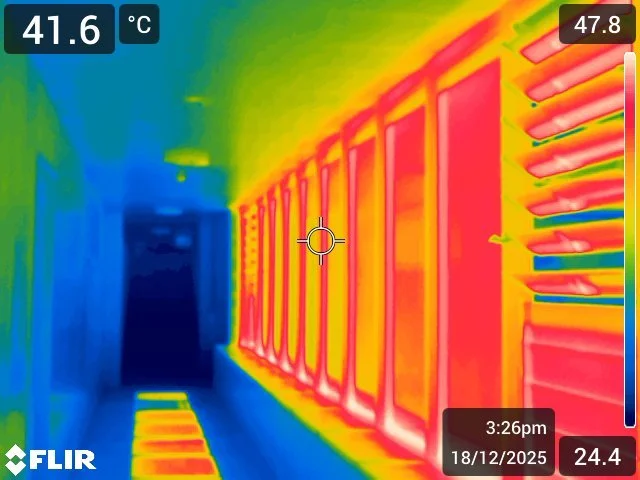
Thermal imaging uses infrared technology to detect surface temperature variations.
When interpreted under appropriate environmental conditions, these surface temperature patterns can reveal where heat is being lost, where insulation is underperforming or where conditions may lead to condensation.
Why Thermal Imaging Matters
Thermal irregularities can lead to:
Ongoing heat loss and higher energy costs
Cold internal surfaces and discomfort
Increased risk of condensation and mould growth
What Thermal Imaging Can Identify
Missing or disturbed insulation
Thermal bridging
Air leakage pathways
Areas affected by moisture
Surfaces at risk of condensation
How It Works
Thermal imaging cameras record surface temperatures and display them as visual images.
These images are interpreted in context with environmental conditions to understand what they indicate.
What Thermal Imaging Does Not Do
Thermal imaging is an interpretative diagnostic tool. It does not:
See though solid surfaces
Detect mould directly
Confirm structural integrity
Replace invasive investigation where necessary
Thermal Imaging with Airtightness Testing
Thermal imaging is often used on its own but can be combined with airtightness testing where air leakage is a key concern.
Using a blower door to create pressure difference can:
Increase air movement through leakage paths
Create more distinct temperature patterns at leakage points
This is most beneficial when:
Investigating draughts or suspected air leakage
Attempting to locate hard-to-detect leakage pathways
Highlight areas where the air barrier may be discontinuous or less effective
It is generally not required for:
Insulation-only assessments
Moisture investigations where air movement is not a factor
Who It’s For
Homeowners – investigating comfort issues, cold spots or suspected defectsBuilders – quality assurance and defect identificationArchitects and consultants – performance validation and diagnosticsProperty professionals – condition assessment and reportingWhat You Receive
Thermal images highlighting areas of interest
Professional interpretation of observed patterns (for informational purposes only; no design or remedial advice provided)
Findings to support further investigation or action where required